

Confined Space & Rescue
Confined Space & Rescue Cover
Specialist access and rescue support for your team and other contractors.
Work in confined spaces and difficult-access environments needs more than a plan for getting people in. Before work begins, there also needs to be a suitable plan for getting them out if something goes wrong.
Tyne Rope Access provides specialist access and rescue support for confined-space and rope-access operations, with arrangements planned around the actual site, work position and risks involved.
For confined-space work, suitable and sufficient emergency arrangements must be in place before entry. Those arrangements depend on the space and the risks involved; they may include trained rescue personnel, recovery equipment, communications, first-aid provision and rehearsed rescue procedures.
We can work alongside your own site team or specialist contractors to provide the access and rescue capability required for the job.
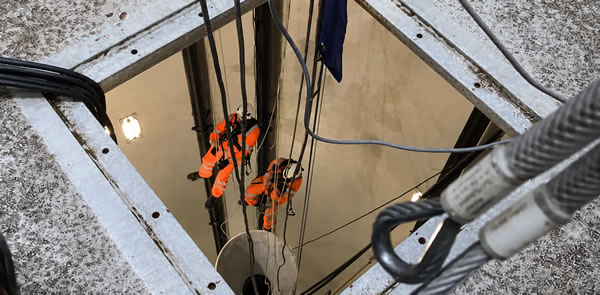
Rescue planning starts before the work does
Being able to reach the workface is only half the access problem. The other half is knowing how someone can be recovered safely if they cannot leave under their own power.
Rescue arrangements should reflect the real geometry of the site, including access points, obstructions, working position and the route available for recovery.
Suitable and sufficient emergency arrangements are required before anyone enters or works in a confined space. What those arrangements need to include depends on the particular space, the risks and the likely rescue scenarios. They should be planned in advance rather than relying solely on the emergency services.
Not necessarily. The required rescue arrangements depend on the risk assessment, the space and the work being carried out. Some situations may require dedicated rescue personnel and specialist equipment; others may require a different arrangement. The important point is that the rescue provision is suitable for the actual foreseeable emergency.
Yes. Rescue and evacuation need to be considered as part of planning rope-access operations. The plan should reflect the actual working positions, rigging, access routes and foreseeable rescue scenarios rather than relying on a generic arrangement.
Not as the sole rescue arrangement for confined-space work. Adequate emergency arrangements need to be in place before the work starts. Emergency services should still be contacted where appropriate, but they are not a substitute for the employer's planned rescue arrangements.
Yes. We can provide specialist access and rescue support alongside other contractors where the agreed rescue arrangements require it. The exact personnel, equipment and rescue plan are determined by the site and scope of work.
Site & Scope Review
We review the work location, access arrangements, foreseeable hazards and the positions from which a rescue may be required.
Rescue Planning
The rescue arrangements are developed around the actual site and work being undertaken, including personnel, equipment, communications and recovery routes as appropriate.
Pre-Work Checks & Briefing
Before work begins, the team confirms the access and rescue arrangements, checks the required equipment and ensures everyone understands their role.
Work & Rescue Provision
The agreed access and rescue arrangements remain in place while the work is carried out, with conditions reassessed if the site or scope changes.